
29 Apr 2026
Sustainability is no longer a future goal — it’s a present-day priority across the packaging industry. From increasing regulatory requirements to changing customer expectations, businesses are under growing pressure to reduce their environmental impact and rethink how products are designed.
For manufacturers of dispensing systems, this presents both a challenge and an opportunity: how can trigger sprayers be made more sustainable without compromising on performance, reliability, or cost?
At Canyon Europe, this shift is shaping how products are developed, with sustainability becoming an integral part of the design process rather than an afterthought.
Making Recycling Easier
One of the biggest challenges in packaging is recyclability. Many traditional trigger sprayers are made from a mix of materials, including metal and different types of plastic, which can make them difficult to process in standard recycling systems.
Simplifying material composition is a key step forward.
By reducing the number of materials used and moving towards fully plastic designs where appropriate, trigger sprayers can become more compatible with existing recycling streams. This supports better material recovery and aligns with broader circular economy goals.
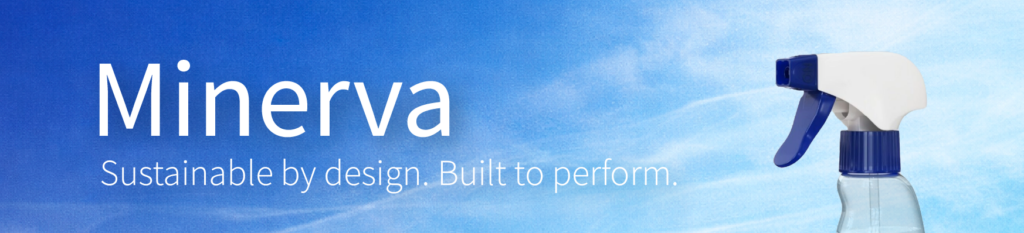
Newer product platforms, such as Minerva, reflect this approach by removing metal components and simplifying material structures, helping improve recyclability without compromising usability.
Durability Still Matters
Sustainability isn’t just about what happens at the end of a product’s life. It’s also about how long it lasts.
A more durable trigger sprayer doesn’t need to be replaced as often. That means fewer units produced, less waste generated, and better value over time.
Achieving this requires careful design – balancing strength, material efficiency, and consistent performance. High-durability solutions like the CHS-3A, designed for demanding, high-frequency use, show how extending product lifespan can significantly reduce replacement rates and overall material consumption.
When done well, durability and sustainability work together—not against each other.
Improving How Products Are Made
Sustainability extends beyond product design to include manufacturing processes.
Advances in production technology now allow manufacturers to reduce material waste, improve consistency, and lower energy consumption. Ongoing investment in modern equipment and process optimisation plays a key role in reducing environmental impact while maintaining high product standards.
Responsible manufacturing is an essential part of delivering sustainable solutions at scale.
A Key Focus at Interpack 2026
These themes—recyclability, durability, and responsible production—are central to conversations across the industry.
At Interpack 2026, sustainability will be one of the defining topics, with manufacturers showcasing how they are adapting to new expectations and exploring more efficient, circular approaches to packaging.
For Canyon Europe, it’s an opportunity to engage with customers and partners, share ideas, and demonstrate how these principles are being applied across our dispensing solutions.
Looking Ahead
There’s no single solution to sustainability in packaging. It’s an ongoing process that requires continuous improvement, innovation, and collaboration.
What’s clear is that design decisions made today will shape the environmental impact of products for years to come.
At Canyon Europe, we remain focused on developing dispensing solutions that balance performance with responsibility—ensuring that sustainability and functionality continue to evolve together.
