
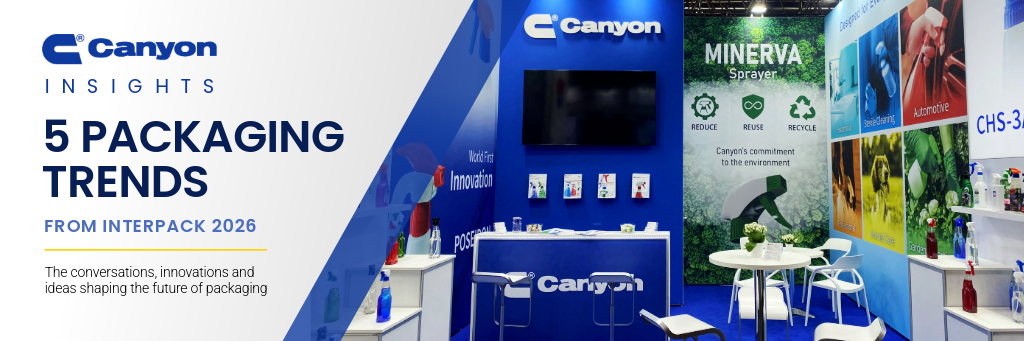
It’s now been two months since Interpack 2026 concluded in Düsseldorf, giving the packaging industry time to reflect on the conversations and innovations that defined this year’s exhibition. While the event showcased the latest technologies and product launches, the biggest takeaway wasn’t any single innovation—it was the direction the industry is heading.
Across a week of discussions with customers, partners and packaging professionals from around the world, several clear themes emerged. Here are five trends we believe will continue to shape packaging and dispensing over the coming years.
1. Sustainability Has Become an Engineering Challenge
Sustainability was one of the dominant themes throughout Interpack, but the conversation has evolved. Rather than simply asking whether products are recyclable, visitors were increasingly interested in how products are designed from the outset.
Material selection, product architecture and end-of-life considerations are now being discussed alongside performance and cost. Sustainability is no longer an afterthought—it’s becoming an integral part of the engineering process.
Developments such as Minerva Mono, our monomaterial trigger sprayer, reflect this shift by simplifying material construction while maintaining the performance expected from a professional dispensing solution.
2. PPWR Is Influencing Product Development
The Packaging and Packaging Waste Regulation (PPWR) was one of the most talked-about topics throughout the exhibition.
Businesses are increasingly looking beyond compliance and considering how future regulations will influence product design. Improving recyclability, simplifying material structures and designing with the full product lifecycle in mind are becoming key priorities.
As the regulatory landscape evolves, manufacturers will need to balance these expectations with the performance and reliability customers continue to demand.
3. Performance Remains Essential
While sustainability dominated many discussions, one message was clear: performance still comes first.
Customers continue to expect dispensing solutions that are reliable, durable and easy to use. A well-designed trigger sprayer not only improves user experience but can also contribute to sustainability by reducing waste and extending product life.
Products such as the CHS-3A demonstrate how durability can support both operational efficiency and environmental responsibility through longer service life and reduced replacement frequency.
4. Simplicity Is Becoming a Competitive Advantage
Innovation isn’t always about adding more features. Increasingly, it’s about removing unnecessary complexity.
Across the exhibition there was a noticeable move towards simpler product designs, reduced material complexity and components that are easier to manufacture and recycle. Thoughtful engineering and material optimisation are becoming important ways for manufacturers to improve both sustainability and efficiency.
5. Collaboration Will Drive Future Innovation
Perhaps the biggest takeaway from Interpack wasn’t a product—it was the importance of collaboration.
As packaging challenges become more complex, success will depend on closer partnerships between manufacturers, brand owners, packaging suppliers and recyclers. Increasingly, businesses are looking for suppliers who can offer expertise and long-term support, not just products.
Looking Ahead
Two months on from Interpack, the conversations that began in Düsseldorf continue to shape the packaging industry.
Sustainability is becoming embedded in product design. Regulations such as PPWR are influencing engineering decisions. At the same time, customers continue to expect high levels of performance, reliability and durability.
At Canyon Europe, these industry trends continue to influence how we develop our dispensing solutions. From exploring monomaterial designs through Minerva Mono to engineering durable products such as the CHS-3A, we remain focused on delivering trigger sprayers that balance performance, reliability and sustainability.
Interpack may only take place every three years, but the discussions it inspires will continue to influence the future of packaging long after the exhibition halls have closed.

Sustainability is no longer an afterthought—it’s becoming an integral part of the engineering process.
